
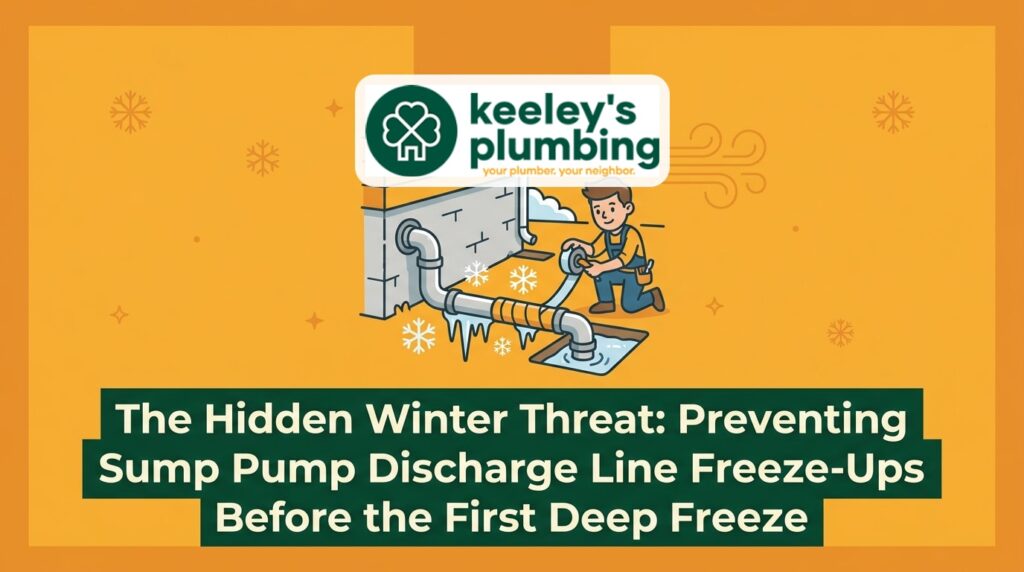
The Silent Danger Lurking Outside Your Home This Fall
Late fall in Northern Illinois brings a highly deceptive weather pattern. The days might still feel mild, but the overnight temperature drops are already setting the stage for a plumbing disaster. Addressing The Hidden Winter Threat: Preventing Sump Pump Discharge Line Freeze-Ups Before the First Deep Freeze is one of the most critical, yet frequently overlooked, steps in seasonal home maintenance. While you might be focused on scheduling furnace tune-ups, sealing drafty windows, or preparing for the holidays, the exterior vulnerabilities of your plumbing system are quietly compounding.
The core issue stems from the unpredictable November freeze-thaw cycles. During this transitional period, homeowners often assume their homes are safe from freezing pipes because the bitter cold of January hasn’t arrived. However, this is exactly when your exterior discharge line is most at risk. The fluctuating temperatures create an environment where small amounts of water can become trapped, freeze, and slowly build an impenetrable blockage over several weeks.
Understanding what you need to know about sump pumps means recognizing that the interior pump is completely dependent on the health of the exterior pipe. If the water has nowhere to go, the system fails. The decision point you face right now is simple but urgent: proactively address vulnerable, poorly graded discharge lines while the ground is still workable, or risk facing catastrophic basement flooding during the first major winter thaw when emergency excavation is nearly impossible.
How Fluctuating Temperatures Create Hidden Ice Blockages
To understand why late fall is so dangerous for your basement, you have to look at the physics of freezing water and the specific climate patterns of our region. In Northern Illinois, November frequently delivers daytime temperatures well above freezing, followed by nighttime temperatures that plummet into the twenties. This creates the perfect storm for rapid, hidden ice accumulation inside your exterior plumbing.
When water freezes, it undergoes thermal expansion, increasing in volume by approximately 9%. Inside a rigid PVC or corrugated plastic pipe, this expansion exerts immense outward pressure. However, a pipe rarely freezes solid all at once. Instead, the blockage forms through a compounding, layer-by-layer process driven by the daily weather cycle. It is one of the most critical warning signs you need a professional before winter sets in permanently.
Here is how the hidden blockage develops long before the true deep winter arrives:
- The Initial Freeze: A small amount of standing water left in the pipe freezes overnight, creating a thin layer of ice along the bottom of the discharge line.
- The Daytime Thaw: The next day, temperatures rise to 45°F. Snow melts, or rain falls, and the sump pump ejects water. This new water flows over the ice layer, but because the ground and the existing ice are still freezing cold, the new water loses its heat rapidly.
- The Compounding Blockage: When the sun sets and temperatures drop again, the new water freezes on top of the old ice. Night after night, layer by layer, the ice builds upward until it completely chokes off the diameter of the pipe.
The Role of Poor Pipe Grading
Gravity is the only mechanism your discharge line relies on to clear itself of water once the pump stops pushing. A properly installed pipe maintains a continuous, gentle downward slope away from the foundation. When the pump shuts off, all remaining water should freely drain out the end of the line, leaving the pipe completely empty and dry.
However, poor grading is incredibly common. Over time, soil settles, landscaping changes, or heavy lawn equipment crushes corrugated extensions. This creates dips, sags, or negative slopes in the line. Even a sag that is only an inch deep will trap a small puddle of water every time the pump cycles. During the November freeze-thaw cycles, those small trapped puddles become the anchor points for the compounding ice blockages described above. Without trapped water, there is nothing to freeze; poor grading is the root cause of the entire threat.

Why a Frozen Discharge Line Leads to Indoor Flooding
A frozen exterior pipe might seem like a problem that stays outside, but the consequences are entirely internal. When the discharge line is choked with ice, it sets off a rapid chain reaction of mechanical failures that inevitably leads to a flooded basement. Understanding this sequence is a core component of proper sump pump maintenance.
Here is the exact step-by-step process of how an exterior freeze destroys your interior protection:
- The Water Backs Up: Groundwater enters your sump pit as usual. The float switch rises, signaling the pump to turn on. The impeller spins, forcing water up the vertical pipe and out toward the exterior line.
- Hitting the Ice Wall: The evacuated water hits the solid ice blockage in the poorly graded section of the discharge line. Because water cannot compress, it stops moving forward. The pressure builds instantly, and the water is forced to flow backward, returning straight down into the sump pit.
- Continuous Operation: Because the water never actually leaves the pit, the water level never drops. Consequently, the float switch remains in the elevated “on” position. The pump continues to run at full power, desperately trying to move water that has nowhere to go.
- Motor Burnout: Sump pumps are designed to run in short, intermittent cycles. They rely on the surrounding water to cool their internal motors. When forced to run continuously against a dead-headed line, the motor rapidly overheats. Within a matter of hours, the thermal overload will trip, or the motor windings will literally burn out, destroying the unit.
- Basement Flooding: With a dead pump sitting in the pit, your home has zero defense against rising groundwater. The next time the November freeze-thaw cycles bring a heavy rain or rapid snowmelt, the water will simply overflow the pit and cover your basement floor. We see this exact scenario play out in Lombard, IL area homes every single winter.
Warning Signs Your Discharge Line is Vulnerable
You do not have to wait for a flooded basement to find out your system is at risk. By inspecting your exterior plumbing during the late fall, you can spot the vulnerabilities before the ground freezes solid. Identifying these issues early is one of the best ways to prevent burst pipes and catastrophic water damage.
Walk around the exterior of your home and look for these critical warning signs:
- Visible sagging or dips: Look at the pipe as it exits your foundation and travels across the yard. If you can see a noticeable dip, a crushed section, or a “belly” in a corrugated extension hose, water is absolutely trapped in that spot.
- Pooling water near the exit: If the ground around the end of the discharge line is constantly soggy, muddy, or features a standing puddle of water, the grade is insufficient. The water is not flowing away from the pipe fast enough, creating a major freeze risk at the exit point.
- Absence of a freeze gap: Inspect the point where the interior pipe exits the wall and connects to the buried exterior line. If it is a solid, sealed connection with no air gap or sloted overflow guard, your system has no safety valve if the underground line freezes.
- Ice formation at the pipe opening: Check the very end of your discharge pipe early in the morning during the November freeze-thaw cycles. If you see icicles forming inside the rim or a solid plug of ice starting to develop, the line is holding water and is already in the process of freezing shut.
- Auditory clues from the basement: Listen to your pump when it runs. If you hear it running for unusually long cycles, humming loudly without moving water, or vibrating excessively, it may be struggling to push water through a partially frozen, restricted exterior line.
Beating the Deep Freeze: Why Timing is Critical
When it comes to fixing a poorly graded discharge line, the calendar is your biggest adversary. The solutions required to permanently protect your home involve moving earth—trenching, re-routing, and re-grading. This kind of work is highly dependent on the condition of the soil.
In Northern Illinois, the frost line—the maximum depth to which groundwater in the soil freezes—can reach an astonishing 36 to 40 inches deep during the peak of winter. Once the frost line begins to push downward, the soil turns as hard as concrete. Excavating frozen ground requires specialized heavy machinery, ground-thawing equipment, and significantly more labor, turning a straightforward preventative job into a massive, disruptive undertaking.
Here is a timeline illustrating why the November freeze-thaw cycles represent your final window of opportunity:
| Time of Year | Ground Condition | Action Required |
|---|---|---|
| Early Fall (Sept – Oct) | Soil is warm, loose, and easily workable. | Ideal time for routine inspections and minor grading adjustments. |
| Late Fall (November) | Surface freezing begins overnight; soil remains workable during the day. | Urgent Action Phase: The absolute final window for professional trenching, installing freeze gaps, or re-routing lines before the soil locks up. |
| Deep Winter (Dec – Feb) | Frost line reaches 36-40 inches deep. Soil is impenetrable to standard hand tools. | Preventative ground work is nearly impossible. Emergency thawing and indoor mitigation are the only remaining options if a failure occurs. |
Waiting for the first major snowstorm to hit is simply too late. By the time the snow is piling up, the ground beneath it has already begun to freeze solid, trapping your vulnerable pipes in their current, poorly graded state for the rest of the season.
Professional Solutions for Long-Term Protection
DIY band-aids, like wrapping a thin layer of foam insulation around a crushed corrugated pipe, will not stop the relentless pressure of expanding ice. True protection requires structural modifications to the way water exits your property. At Keeley’s Plumbing, we take a highly proactive approach to protecting local homes. We focus on correcting the root cause of the problem—the grading and the routing—to ensure your system functions flawlessly through the harshest weather. And while our preventative grading work is designed to keep you safe, our reliable emergency plumbing services are always standing by as a backup if a deep-freeze disaster has already struck.
Professional plumbers utilize several permanent solutions to secure discharge lines in Lombard, IL area homes:
Professional Re-Grading: The most effective solution is often re-trenching the discharge path. A professional will use laser levels to ensure a continuous, gravity-fed slope that drops at least one-quarter inch per foot of run. This guarantees that every drop of water evacuates the pipe the moment the pump shuts off, leaving nothing behind to freeze.
Installing Freeze Gaps (Air Gaps): A freeze gap is a specialized, sloted PVC fitting installed right where the pipe exits the foundation, before it goes underground. If the buried portion of the line freezes solid, the water forced out by the sump pump will simply spill out of the slots in the freeze gap. While this creates a puddle next to your foundation, it completely saves the pump from burning out and prevents the water from backing up into your basement.
Burying Lines Below the Frost Line: For ultimate protection, the discharge line can be trenched deep into the earth, dropping below the 40-inch frost line where the ground temperature remains relatively constant above freezing. The line is then routed to a safe municipal storm drain or a dedicated dry well, ensuring it never experiences freezing temperatures regardless of the weather above ground.
The Importance of Licensed Expertise
Modifying the exterior discharge of a sump pump is not a weekend project for a homeowner. It requires a deep understanding of fluid dynamics, soil mechanics, and local municipal regulations. Here is why licensed expertise is essential:
- Precision Equipment: Proper trenching requires specialized equipment to ensure the slope is perfectly consistent. A DIY trench dug with a shovel almost always contains hidden dips that will trap water and create new freeze points.
- Municipal Code Compliance: You cannot simply dump hundreds of gallons of water anywhere. Discharging water onto a neighbor’s property, across a public sidewalk (where it will freeze and create a slipping hazard), or directly into a sanitary sewer line violates local codes. Licensed professionals ensure the discharge point is legal, safe, and effective.
- Material Selection: Standard thin-wall PVC or cheap corrugated hose will shatter under the pressure of shifting, freezing soil. Professionals use heavy-duty, schedule 40 PVC and proper bedding materials like gravel to ensure the pipe survives the immense pressure of the winter ground.
Frequently Asked Questions About Sump Pump Winterization
Why do sump pump lines freeze?
Sump pump lines freeze primarily due to poor grading that traps standing water inside the pipe. When the pump shuts off, gravity should pull all remaining water out of the line. If there are dips, sags, or blockages, the water sits in the pipe and freezes when temperatures drop, gradually building an ice block that chokes the entire line.
How to tell if a sump pump discharge is blocked?
The most obvious sign of a blocked discharge line is a pump that runs continuously without the water level in the pit dropping. You may also hear the pump humming loudly or vibrating as it struggles against the dead-headed pressure. Outside, you might see water spilling out of connections near the foundation or a solid plug of ice at the end of the pipe.
When should I winterize my sump pump?
You should winterize your sump pump and inspect the exterior lines during the late fall, specifically in October or early November. It is crucial to complete any necessary re-grading, trenching, or pipe replacement before the ground freezes solid, as excavating frozen soil is incredibly difficult and disruptive.
Can a sump pump run in the winter?
Yes, a sump pump can and often will run during the winter. Snowmelt, unexpected rainstorms during warmer days, and high water tables can still cause groundwater to enter your basement. This is why it is so important that the exterior discharge line remains clear of ice all season long.
How far should a sump pump discharge from the house?
A sump pump should discharge water at least 10 to 20 feet away from the foundation of the house. If the water is dumped too close, it will simply seep back down through the soil, re-enter the drain tiles, and force the pump to constantly recycle the exact same water, leading to rapid system wear.
What is a freeze gap and does my system need one?
A freeze gap is a specialized exterior fitting with open slots that connects the indoor pipe to the buried outdoor line. If the underground pipe freezes solid, the pumped water escapes through the slots rather than backing up into the basement. Every home with a buried discharge line should have a freeze gap installed as a critical failsafe.
Secure Your Home Before the Ground Freezes
The fluctuating late-fall temperatures in Lombard, IL area homes present a very specific, hidden danger to your property. A poorly graded pipe trapping small amounts of water today can easily become a solid wall of ice tomorrow, leading to a burned-out motor and a flooded basement. The peace of mind that comes from knowing your lower level is fully protected against the freeze-thaw cycle is invaluable. Do not wait for the soil to turn to concrete. Act now while the ground is still workable, and schedule a professional assessment to winterize your sump pump and secure your discharge lines before the deep freeze arrives.