
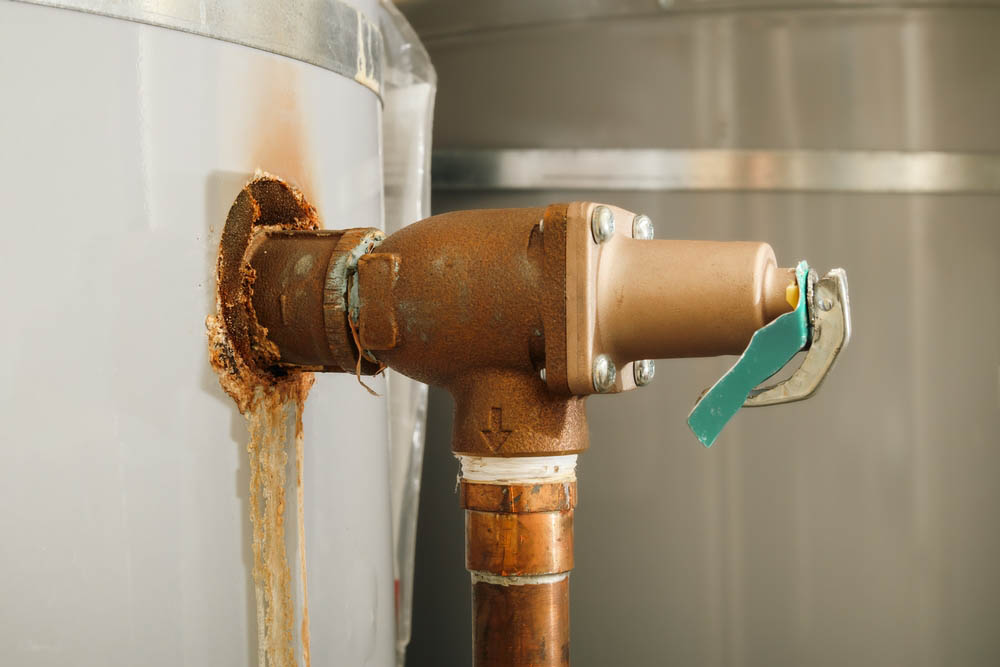
In a nutshell, an internal tank breach means the steel tank inside your water heater has failed. When it does, water then escapes through the openings created by corrosion.
Unfortunately, units affected by this issue cannot be repaired and can only be replaced. Keeley’s Plumbing offers water heater repair in Glen Ellyn, IL. Read on as we discuss the implications of having a water heater affected by an internal tank breach.
What an Internal Tank Breach Really Means
Your water heater tank is made of steel with a glass lining meant to protect it. That lining is not permanent. Over time, normal expansion and contraction cause it to crack. When steel becomes exposed, corrosion begins from the inside. You never see it happening. Pressure continues to build as the tank heats water daily, weakening the structure until it can no longer hold.
In Wheaton, water quality and mineral content can accelerate this process. Sediment settles at the bottom of the tank, trapping heat and increasing stress on the metal. Once corrosion reaches the tank wall, failure is no longer a question of if, but when.
Early Signs Homeowners Often Overlook
Most internal tank breaches provide subtle warnings. Rust-tinted hot water is often dismissed as a temporary issue. Popping or rumbling sounds are also often blamed on normal operation. Moisture near the base of the tank is mistaken for condensation. Each of these can signal internal corrosion already underway.
Why a Breached Tank Cannot Be Fixed
Homeowners often ask whether the tank can be patched or welded. It cannot. Once corrosion compromises the internal steel wall, the pressure rating of the tank is no longer safe. Any repair attempt would fail under normal operating conditions and create a risk of sudden rupture.
This is why professionals recommend water heater replacement rather than repair. It is not a sales tactic. It is a matter of safety and physics.
The Real Cost of Waiting Too Long
A breached tank can release dozens of gallons of water into your home. That water does not stop at the utility room. It spreads into flooring, drywall, and insulation. Mold can begin forming within days. During winter, replacement delays become more common, leaving families without hot water when they need it most.
Preventive action from water heater services is almost always less expensive than emergency response.
How to Reduce Your Risk Going Forward
You cannot stop time, but you can reduce exposure.
Smart steps include:
- Annual water heater inspections
- Anode rod checks every 2–3 years
- Tank flushing to remove sediment
- Proactive replacement before failure
If your unit is over 10 years old, you are operating on borrowed time.
FAQs: Internal Tank Breach and Water Heaters
Can an internal tank breach be repaired?
No. Once the tank itself fails, replacement is the only safe option.
How long do water heaters typically last in Wheaton, IL?
Most residential units last between eight and twelve years, though mineral content and usage patterns can shorten that lifespan.
Is rust in hot water a serious concern?
Yes. Rust often indicates internal corrosion and should be evaluated promptly.
An internal tank breach is not dramatic until it is devastating. By the time water appears, the damage is done.
If your water heater is aging or showing warning signs, get in touch with Keeley’s Plumbing for water heater repair in Glen Ellyn, IL. Call us for a professional evaluation to prevent property damage and disruption.